文章信息:Jiang, R., Lu, H., Chen, D., Yang, K., Yamazaki, D., Cho, H., Zhao, G., Wei, J., Tian, F. , & Guan, D. (2026). Future flood risk concentration for residents near small rivers across the USA. Nature Sustainability. Advance online publication. https://doi.org/10.1038/s41893-026-01896-7
整理人:徐嘉苗,2025级硕士研究生
整理时间:2026年7月13日
Abstract: Climate change and socioeconomic development are projected to increase global fluvial flood risk. Most studies have focused on large rivers or aggregated regional assessments, leaving limited understanding of how flood risk varies across river sizes. By integrating high-resolution hydrodynamic simulations, demographic projections and current flood defence levels across the contiguous USA, our projections suggest that smaller rivers tend to exhibit greater sensitivity to climate change-induced increases in flood intensity by 2050. Meanwhile, flood defences along small rivers are currently the weakest, potentially placing nearby populations at disproportionately higher risk. Restoring future flood risk along small rivers to historical levels would require the highest flood defence investments among all river sizes—up to ~US$4 million (2005) per kilometre. The elevated flood risk for residents along small rivers appears to be primarily driven by increasing climate-related hazard severity and low defence levels, whereas flood risk along larger rivers is dominated by rising exposure. Together, these results indicate a potential mismatch between future flood defence needs and existing defence levels across river sizes, highlighting the urgent need to prioritize investments for communities along small rivers.
摘要:气候变化和社会经济发展预计将增加全球河流洪水风险。大多数研究集中在大型河流或区域综合评估上,导致对洪水风险在不同河流大小间的变化理解有限。通过整合高分辨率水动力学模拟、人口预测以及美国本土当前防洪水平,我们的预测表明,到2050年,较小的河流对气候变化引发的洪水强度增加表现出更高的敏感性。与此同时,沿小河流的防洪防御目前最为薄弱,可能使附近人口面临不成比例的高风险。将小河流沿线的未来洪水风险恢复到历史水平,需要所有河流规模中最高的防洪投资——每公里最高400万美元(2005年)。沿小河流沿岸居民洪水风险升高的主要原因似乎是气候相关危害严重度的加剧和防御水平降低,而大河流沿岸的洪水风险则主要由暴露风险增加所主导。综合来看,这些结果表明未来防洪需求与各河流规模现有防御水平可能存在不匹配,凸显了优先投资小河流沿岸社区的紧迫性。
1. 研究背景
2. 研究意义
3. 研究方法
4. 主要结论
5. 研究展望
6. 研究主要图表
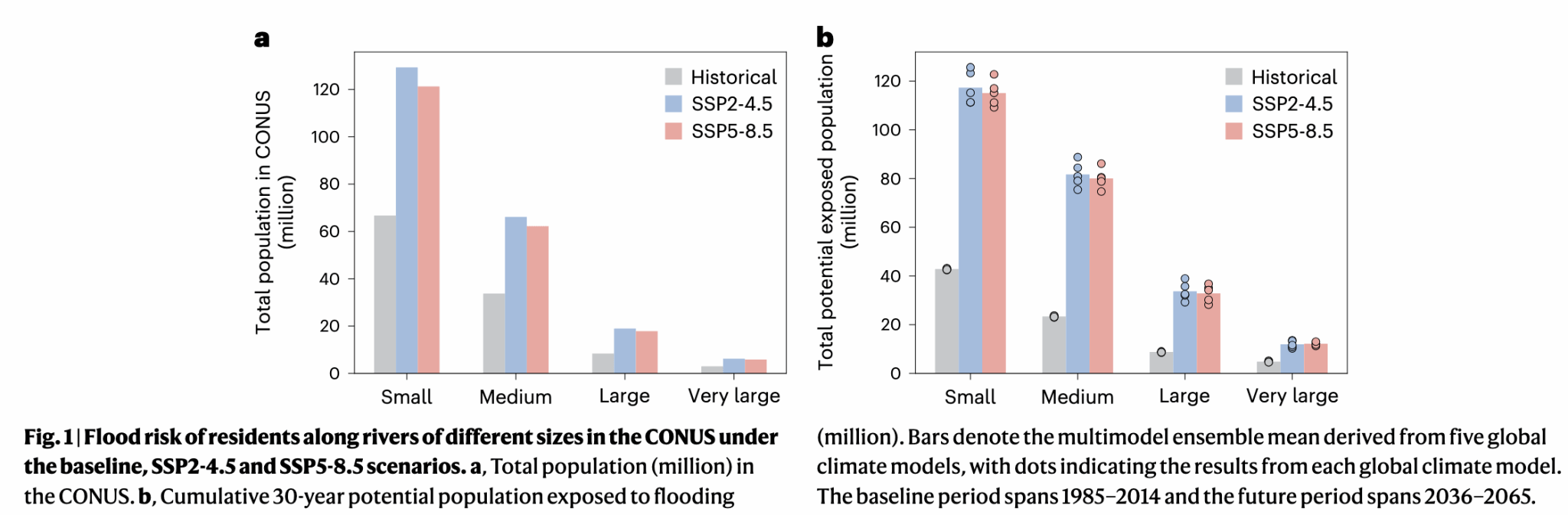
01 美国本土不同河流沿岸居民在基线SSP2-4.5和SSP5-8.5情景下的洪水风险
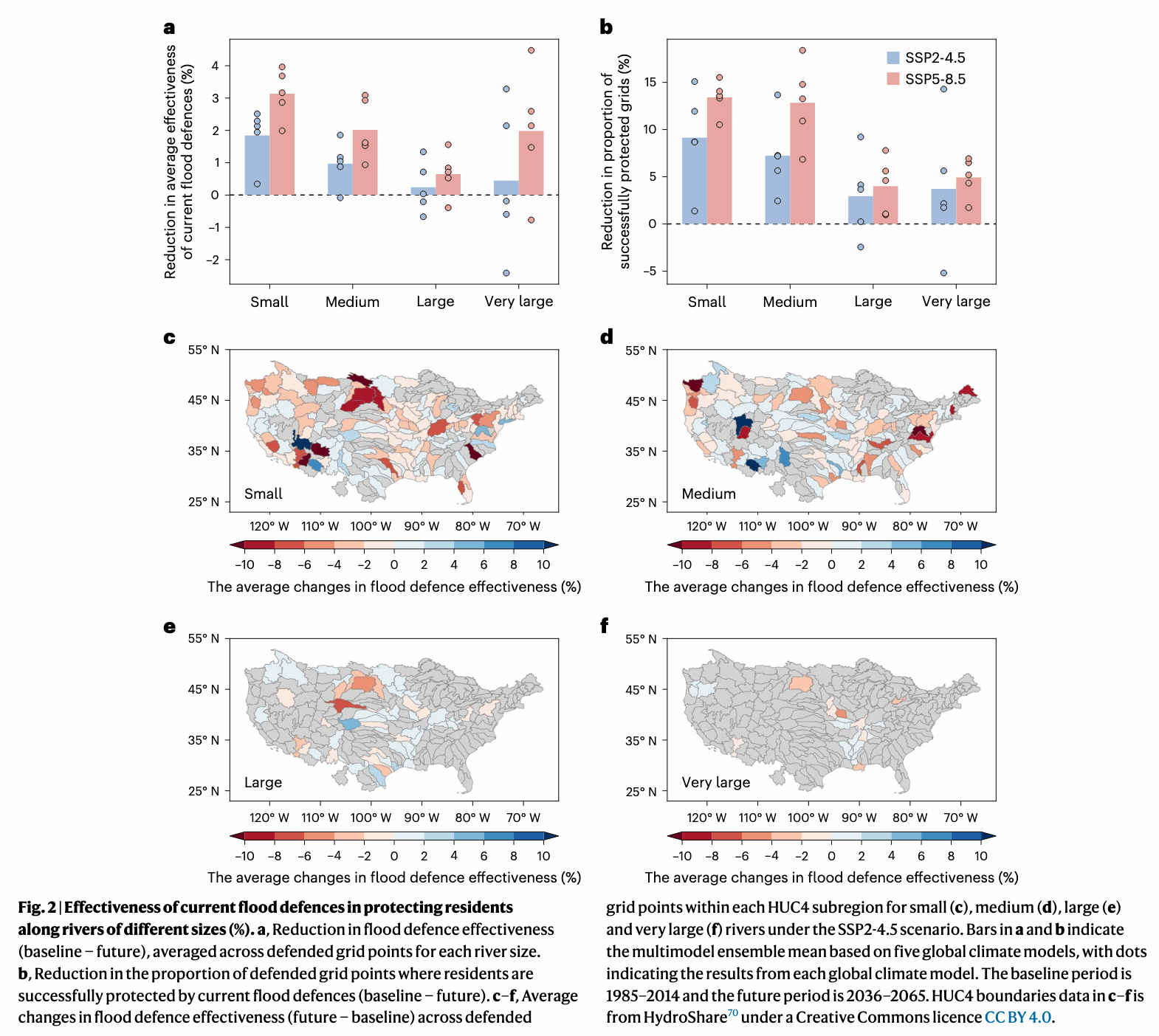
02 当前防洪设施在保护不同大小河流沿岸居民方面的有效性
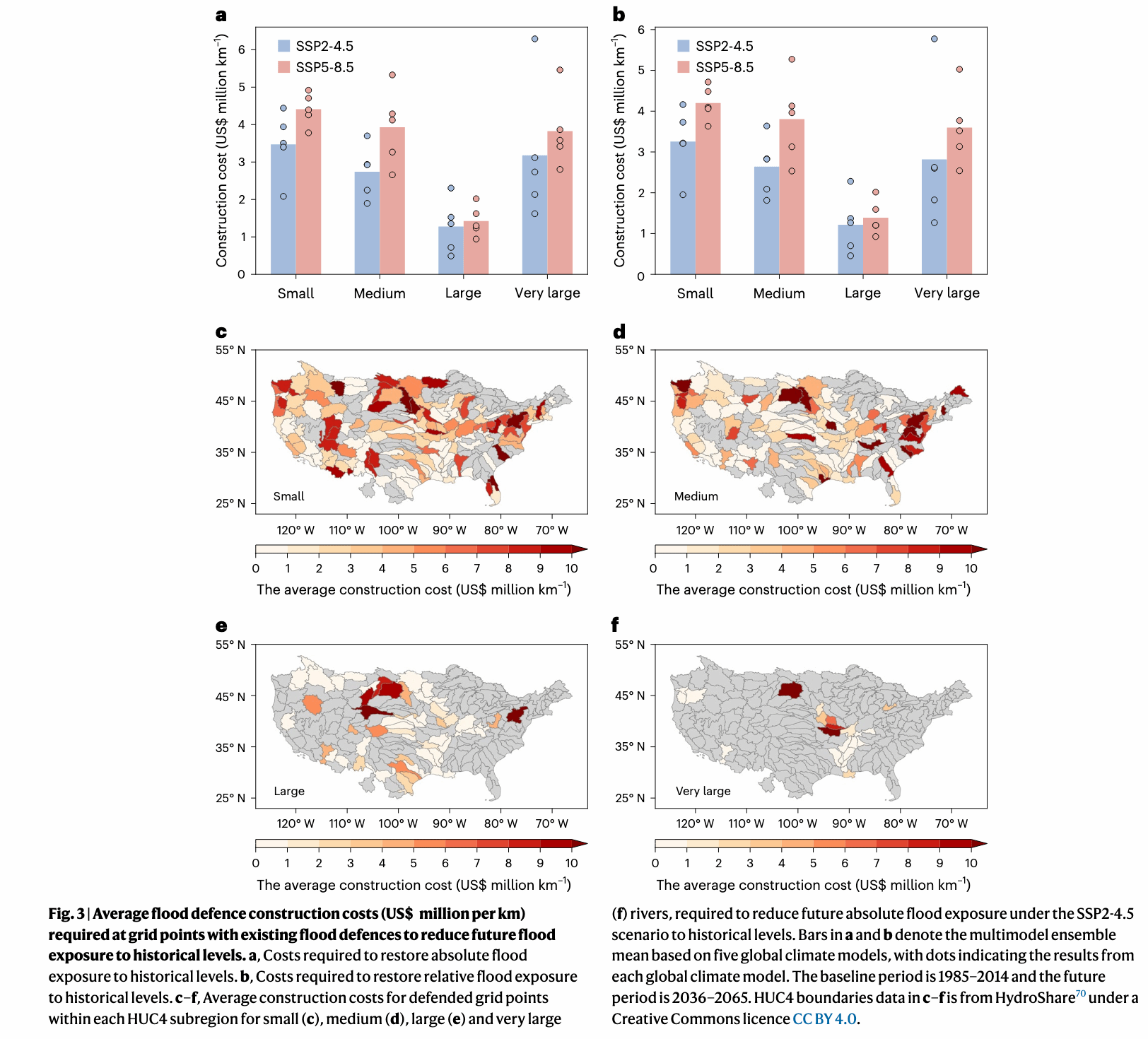
03 在现有防洪设施的电网点,为将未来洪水暴露降至历史水平,所需的平均防洪工程成本
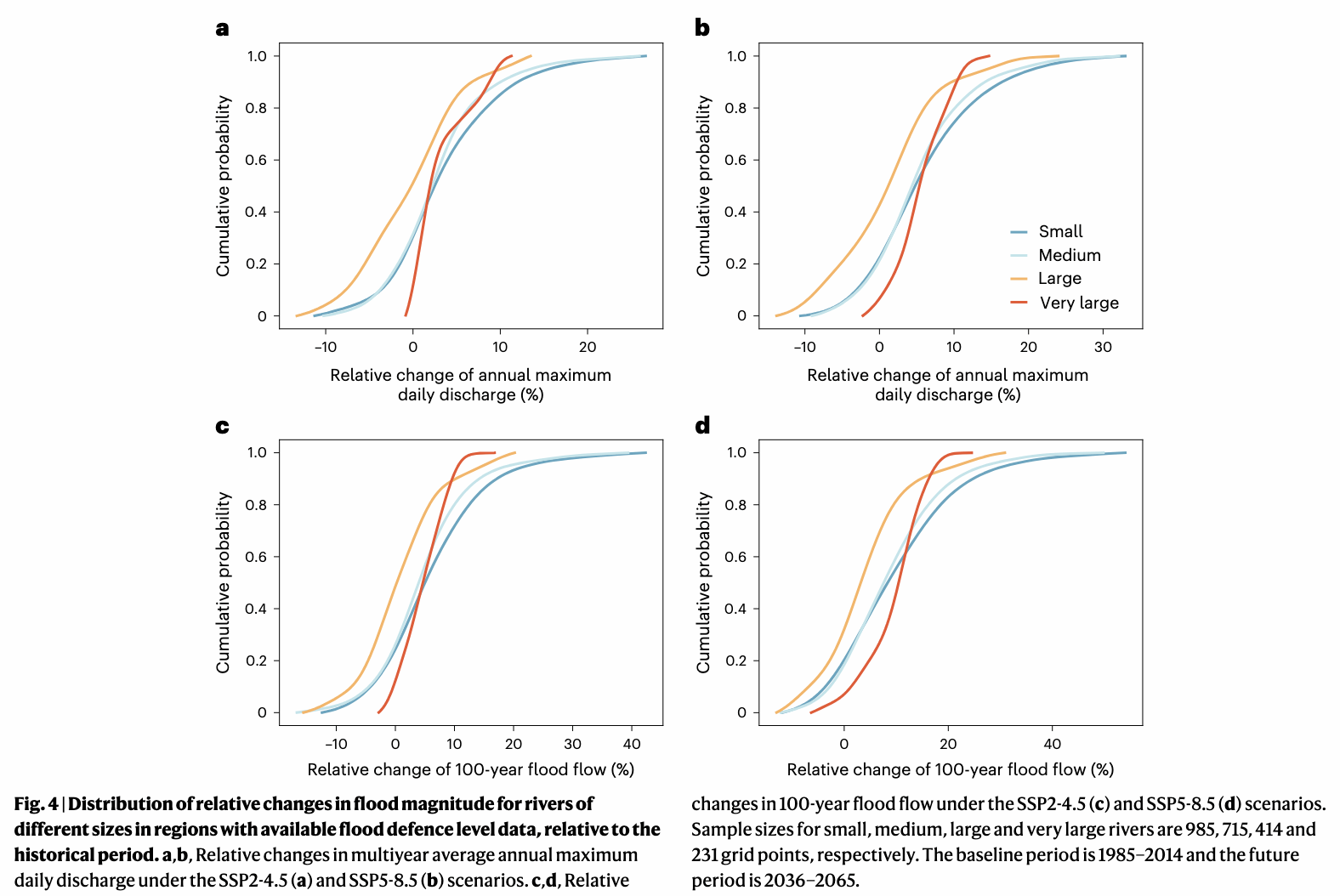
04 在拥有防洪水位数据的地区,相对于历史时期不同大小河流洪水规模相对变化的分布
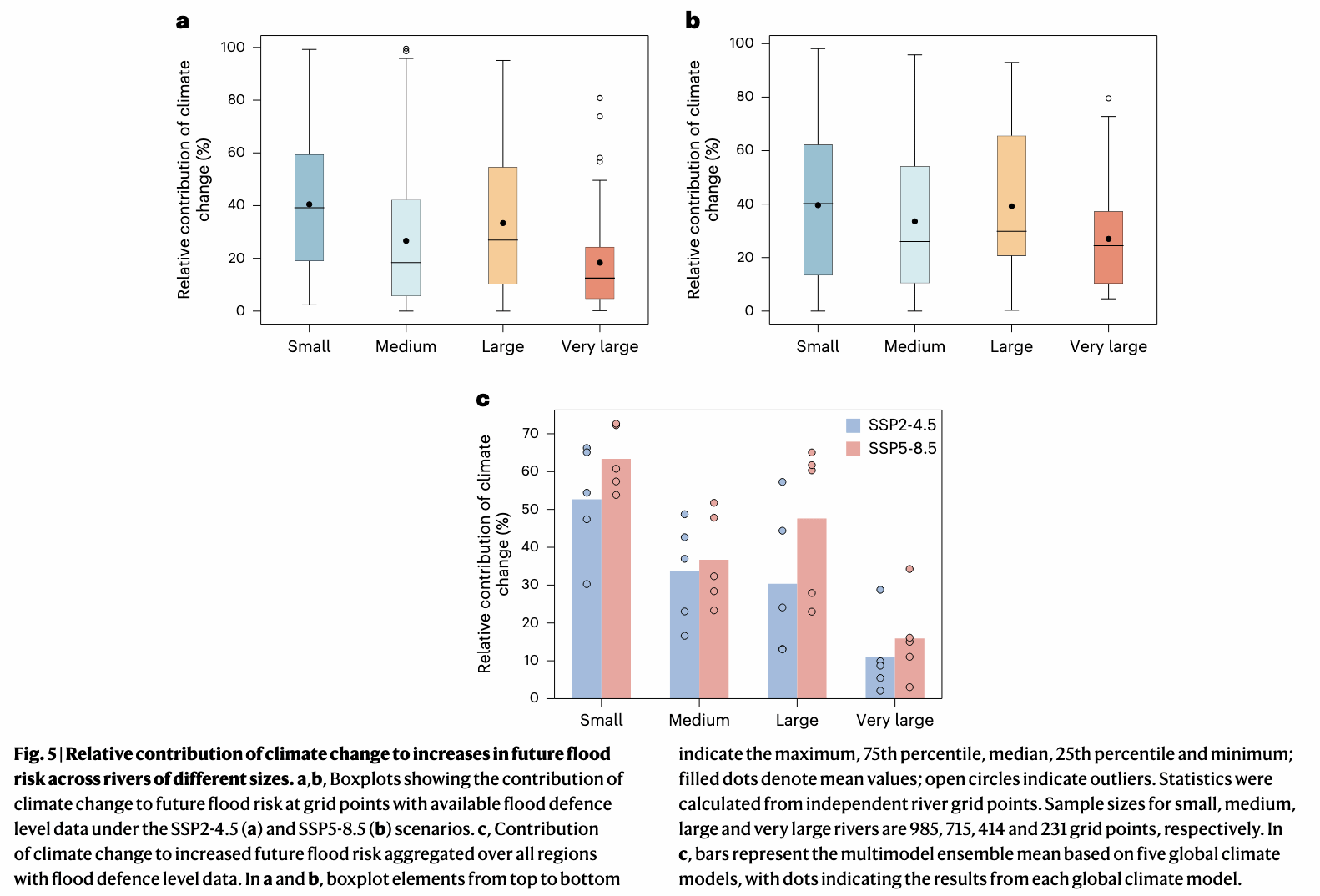
05 气候变化对不同大小河流未来洪水风险增加的相对贡献
原文链接:https://www.nature.com/articles/s41893-026-01896-7
原文转引:https://mp.weixin.qq.com/s/s31c7-1FjQxK8Db9JG762g

