文章信息:Ohenhen, L. O., Shirzaei, M., Davis, J. L., Tiwari, A., Nicholls, R., Dasho, O., Sadhasivam, N., Seeger, K., Werth, S., Chadwick, A. J., Onyike, F., Lucy, J., Atkins, C., Daramola, S., Ankamah, A., Minderhoud, P. S. J., Oelsmann, J. , & Yemele, G. C. (2026). A global threat of sinking deltas. Nature, 649(22), 891-899. https://doi.org/10.1038/s41586-025-09928-6
整理人:徐嘉苗,2025级硕士研究生
整理时间:2026年7月13日
Abstract: River deltas sustain dense human populations, major economic centres and vital ecosystems worldwide1,2. Rising sea levels and subsiding land threaten the sustainability of these valuable landscapes with relative sea-level rise and associated flood, land loss and salinization hazards1–3. Despite these risks, vulnerability assessments are impeded by the lack of contemporary, high-resolution, delta-wide subsidence observations4. Here we present spatially variable surface-elevation changes across 40 global deltas using interferometric synthetic aperture radar. Using this dataset, we quantify delta surface-elevation loss and show the prevalence and severity of subsidence in river deltas worldwide. Our analysis of three key anthropogenic drivers of delta elevation changes shows that groundwater storage has the strongest relative influence on vertical land motion in 10 of the 40 deltas. The other deltas are either influenced by multiple drivers or dominated by sediment flux or urban expansion. Furthermore, we find that contemporary subsidence surpasses absolute (geocentric) sea-level rise as the dominant driver of relative sea-level rise for most deltas over the twenty-first century. These findings suggest the need for targeted interventions addressing subsidence as an immediate and localized challenge, in parallel with broader efforts to mitigate and adapt to climate change-driven global sea-level rise.
摘要:河流三角洲支撑着全球密集的人口、主要经济中心和重要的生态系统。海平面上升和土地下沉威胁着这些宝贵景观的可持续性,海平面相对上升及相关的洪水、土地流失和盐碱化风险。尽管存在这些风险,脆弱性评估仍受限于缺乏当代高分辨率、全三角洲沉降观测数据。我们利用干涉合成孔径雷达展示了40个全球三角洲的空间可变地表高程变化。利用该数据集,我们量化了三角洲地表高程下降,并展示了全球河流三角洲下沉的普遍性和严重程度。我们对三角洲高程变化的三个关键人为驱动因素进行了分析,显示地下水储存对40个三角洲中的10个对垂直地表运动的相对影响最为强烈。其他三角洲则受多种驱动因素影响,或受沉积物通量或城市扩张主导。此外,我们发现当代地表沉降超过绝对(地心)海平面上升,成为21世纪大多数三角洲相对海平面上升的主要驱动力。这些发现表明,需要针对性干预措施,将沉降作为一个即时且局部的挑战,同时应对和适应气候变化引发的全球海平面上升的更广泛努力。
1. 研究背景
2. 研究意义
3. 研究方法
4. 主要结论
研究发现,所调查的全部40个三角洲均呈现整体下沉趋势,其中13个三角洲的平均下沉速率超过当前全球海平面上升速率。约54%至65%的全球三角洲面积正在下沉,受影响的三角洲总面积达460,370平方公里。随机森林模型分析表明,在40个三角洲中,地下水储量变化对垂直地面运动的相对影响力最强,而泥沙通量变化和城市化则起次要作用。尤为关键的是,研究证实当前三角洲的地面沉降速率在18个三角洲中已超过地质海平面上升速率,影响到约2.36亿人口。在三角洲海拔低于1米的区域,沉降对相对海平面上升的贡献在三分之二的三角洲中占据主导地位。研究进一步揭示,约65%的三角洲位于中低收入国家,其应对相对海平面上升的适应能力极为有限。
5. 研究展望
6. 研究主要图表
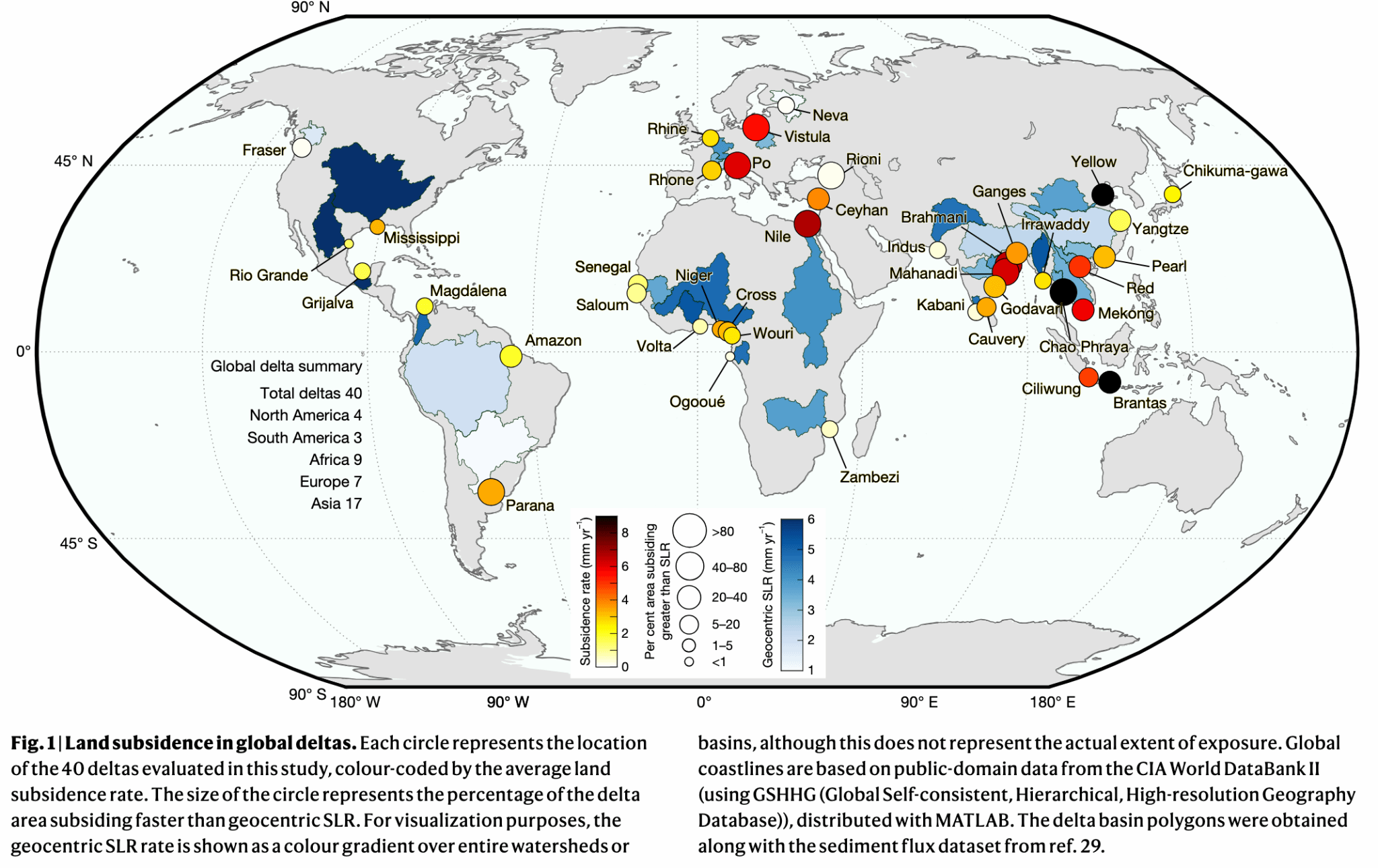
01 全球三角洲的地表沉降
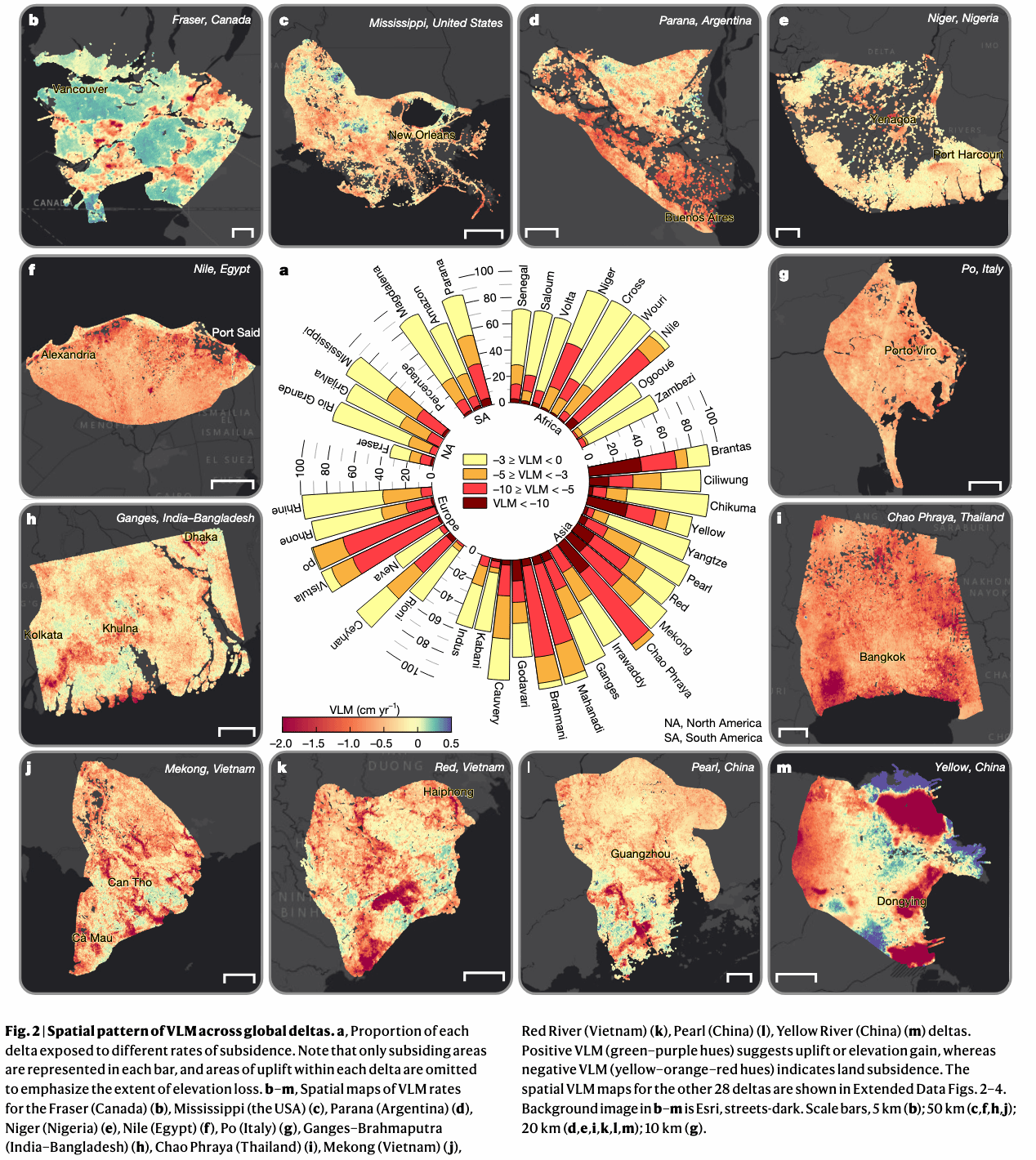
02 跨全球三角洲VLM的空间模式
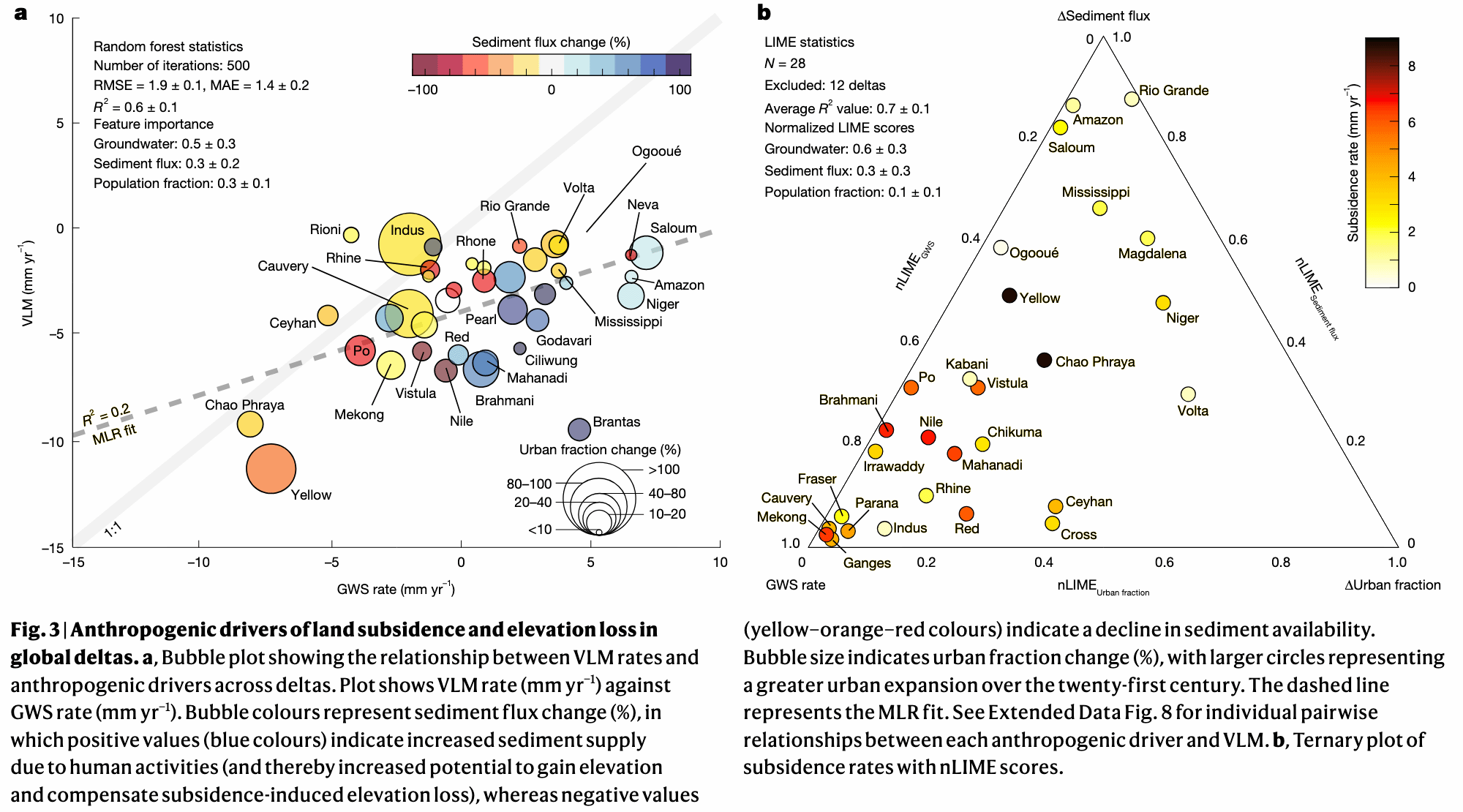
03 全球三角洲地表沉降和海拔下降的人为驱动因素
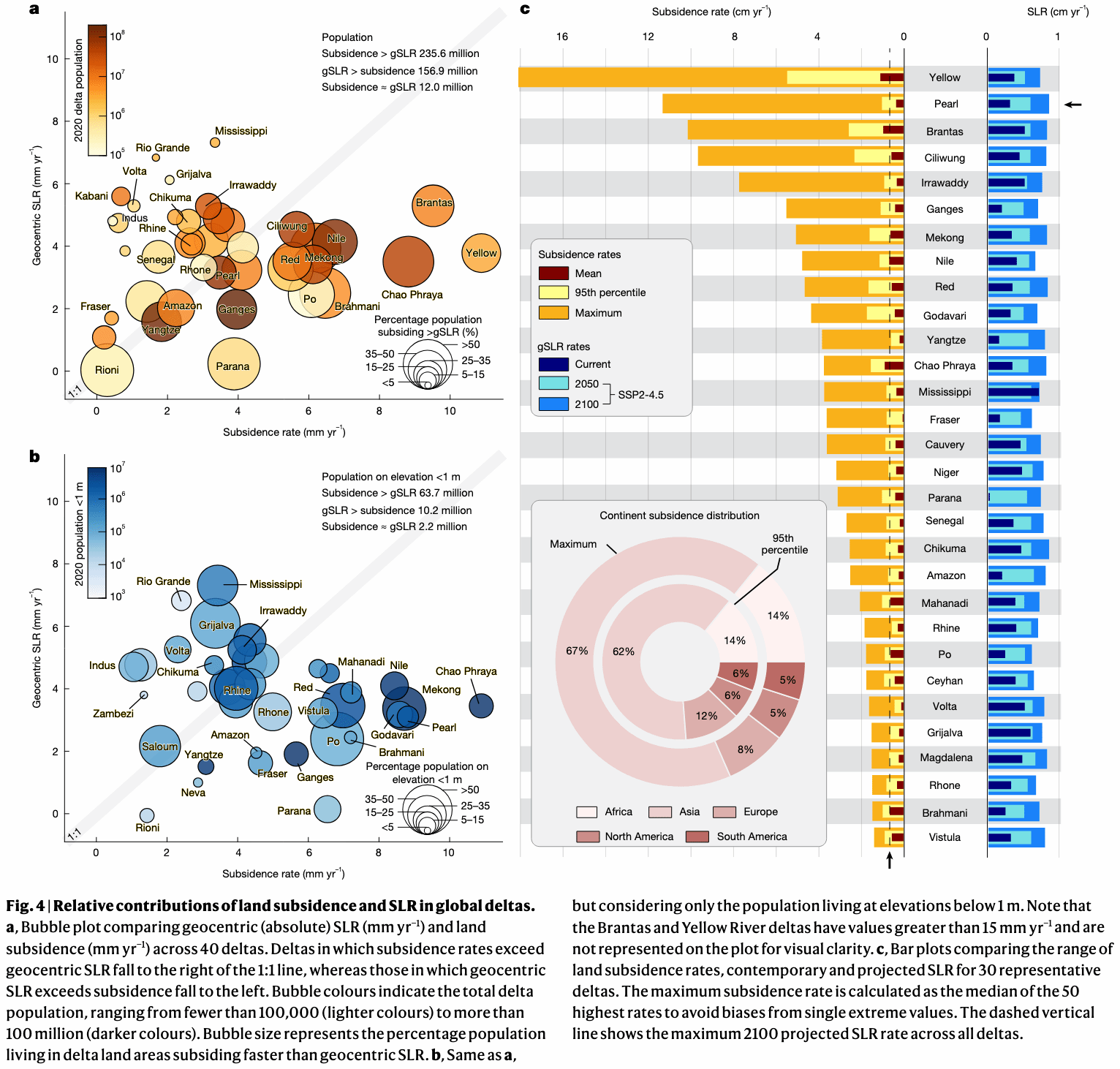
04 地面沉降与SLR在全球三角洲中的相对贡献
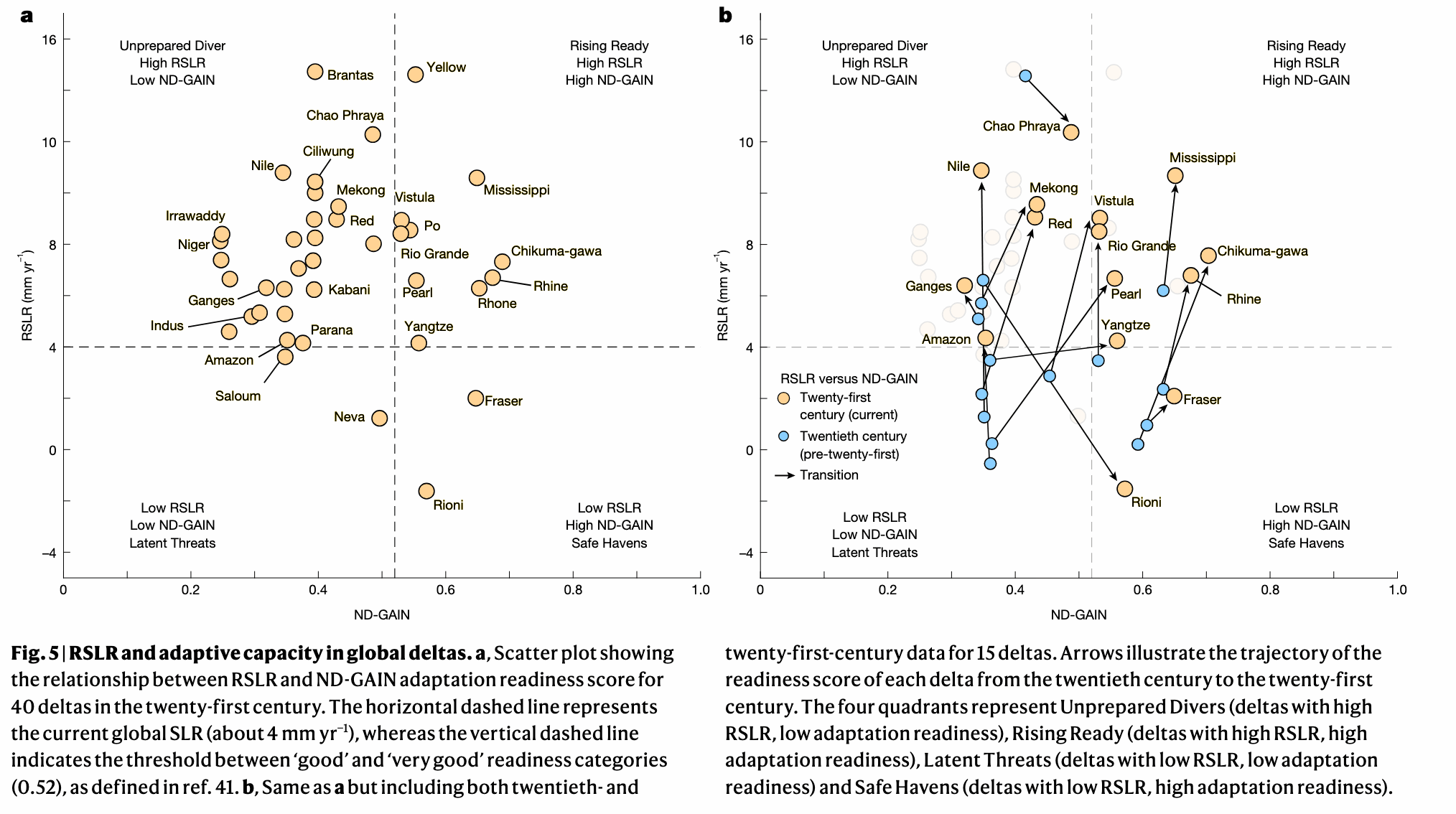
05 全球三角洲中的RSLR与自适应容量
原文链接:https://www.nature.com/articles/s41586-025-09928-6
原文转引:https://mp.weixin.qq.com/s/v11cy1HFbi2LOwGdTFkDQg

