文章信息:Chen, Y., Yu, T., Shu, T., Zhao, X., Liu, W., Cai, Z., Xu, J. , & Zhou, J. (2026). Neolithic-to-pre-Han settlement niche construction across China reveals a transition from passive adaptation to active environmental management. npj Heritage Science. https://doi.org/10.1038/s40494-026-02814-y
整理人:徐嘉苗,2025级硕士研究生
整理时间:2026年8月22日
Abstract: Niche Construction Theory (NCT) posits that humans reshape evolutionary pathways by transforming environments, yet archaeological applications remain limited to single regions or static analyses. Here we compile radiocarbon data from 1,369 prehistoric sites across China and integrate multi-dimensional environmental variables to develop a spatio-temporal geographically weighted regression forest (ST-GWRF) model. We identify three response types of environmental effects on settlement siting: monotonic responses, threshold-triggered declines, and negligible marginal effects. Environmental factor importance exhibits pronounced spatio-temporal heterogeneity. Niche centrality evolves from multicentric to concentric patterns, while niche breadth expands continuously. These dynamics suggest a shift toward conditions consistent with active environmental management, inferred from changes in settlement-environment relationships, as technological advancement may have progressively enabled humans to overcome environmental constraints and occupy diverse ecological niches. Our findings illuminate the long-term mechanisms of human-environment coevolution and provide historically grounded insights for sustainable development in the Anthropocene.
摘要:生态位构建理论( Niche Construction Theory,NCT )认为,人类通过改造环境重塑进化路径,但考古学应用仍局限于单一区域或静态分析。本文整理了中国1369个史前遗址的放射性碳数据,并整合多维环境变量,构建了时空地理加权回归森林( ST-GWRF )模型。我们确定了三种环境效应对定居点选址的响应类型:单调响应、阈值触发的下降和可忽略的边际效应。环境因子重要性表现出明显的时空异质性。生态位中心性由多中心向同心模式演变,而生态位宽度不断扩张。 这些动态表明,从定居点-环境关系的变化推断,与积极的环境管理相一致的条件发生了转变,因为技术进步可能逐步使人类能够克服环境限制,占据不同的生态位。我们的发现阐明了人类-环境协同进化的长期机制,并为人类世的可持续发展提供了具有历史基础的见解。
1. 研究背景
2. 研究意义
3. 研究方法
4. 主要结论
5. 研究展望
6. 研究主要图表
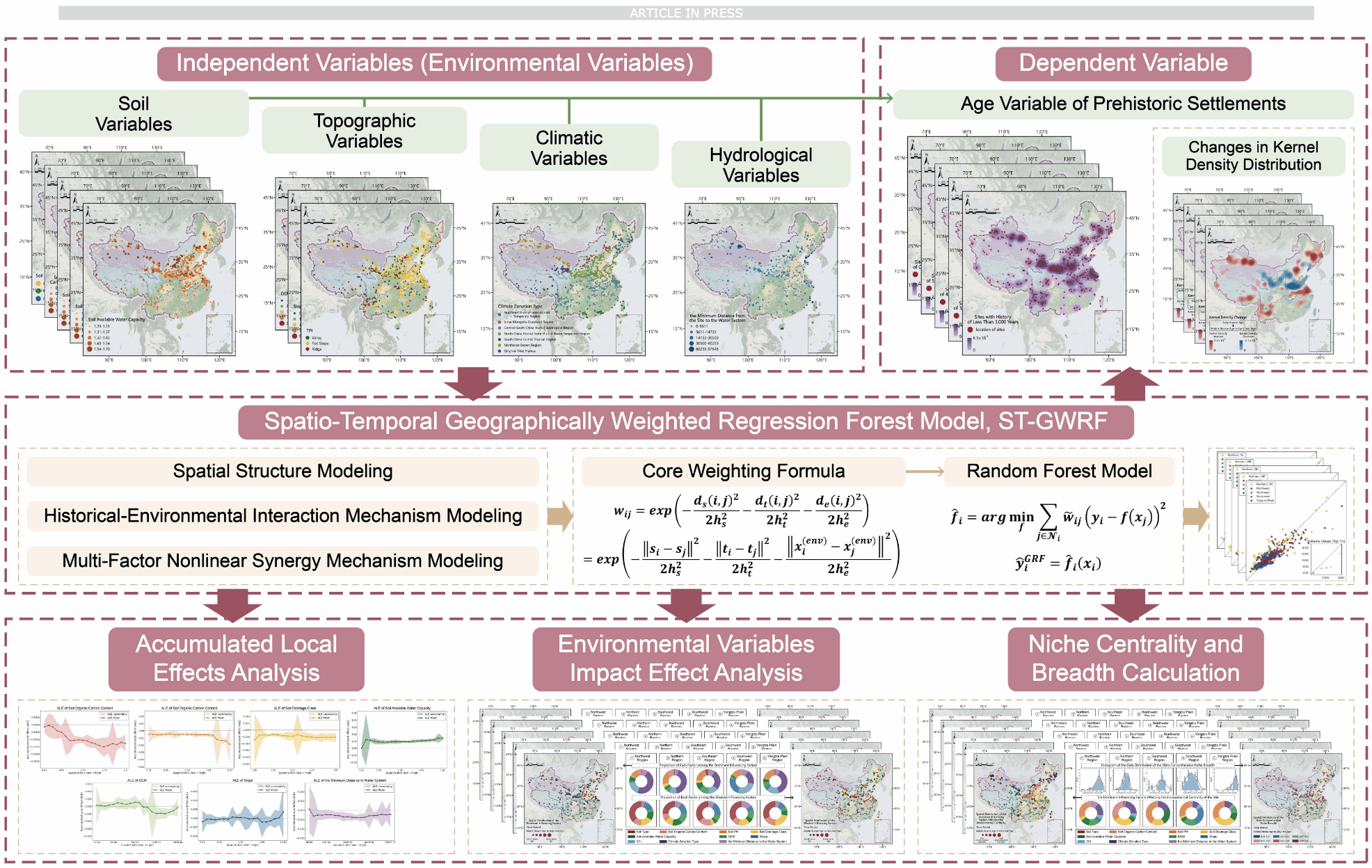
01 研究区域、史前聚落数据库及整体研究框架
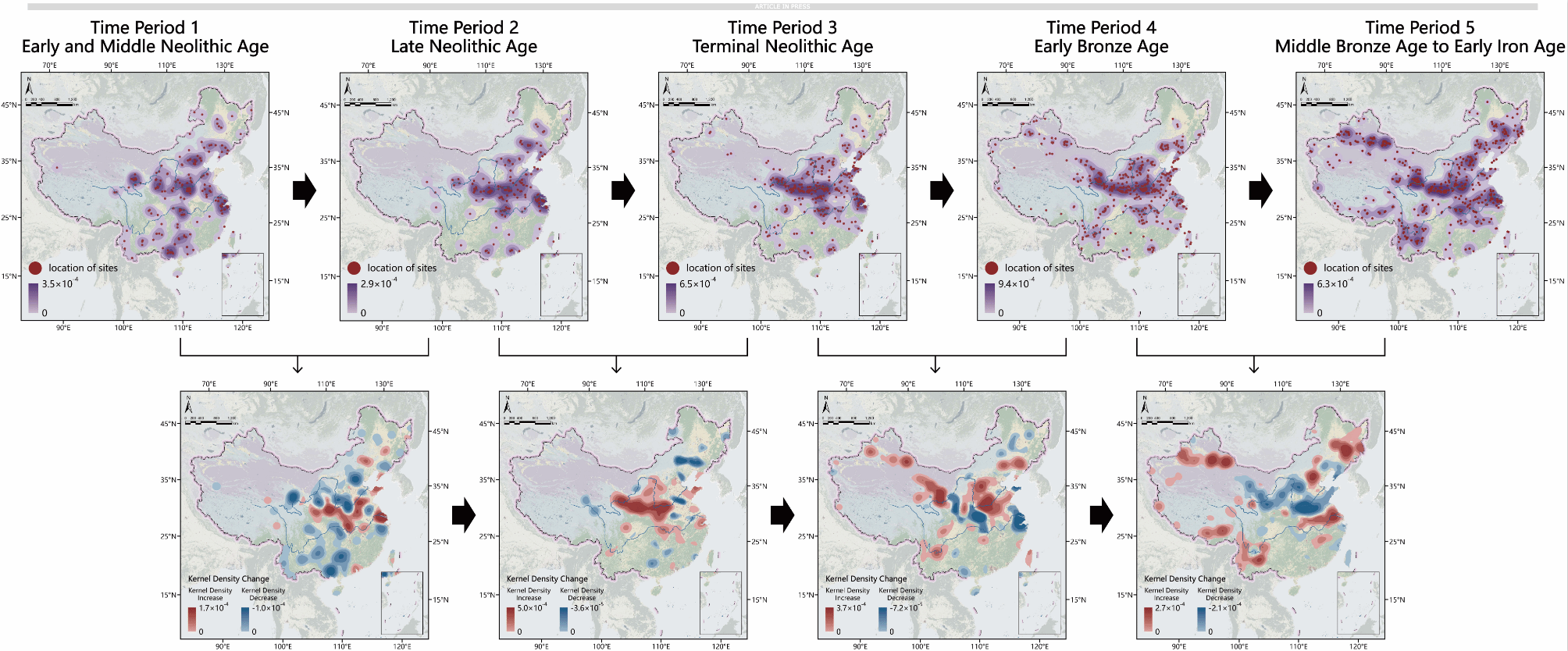
02 中国史前聚落空间分布及不同阶段演化特征
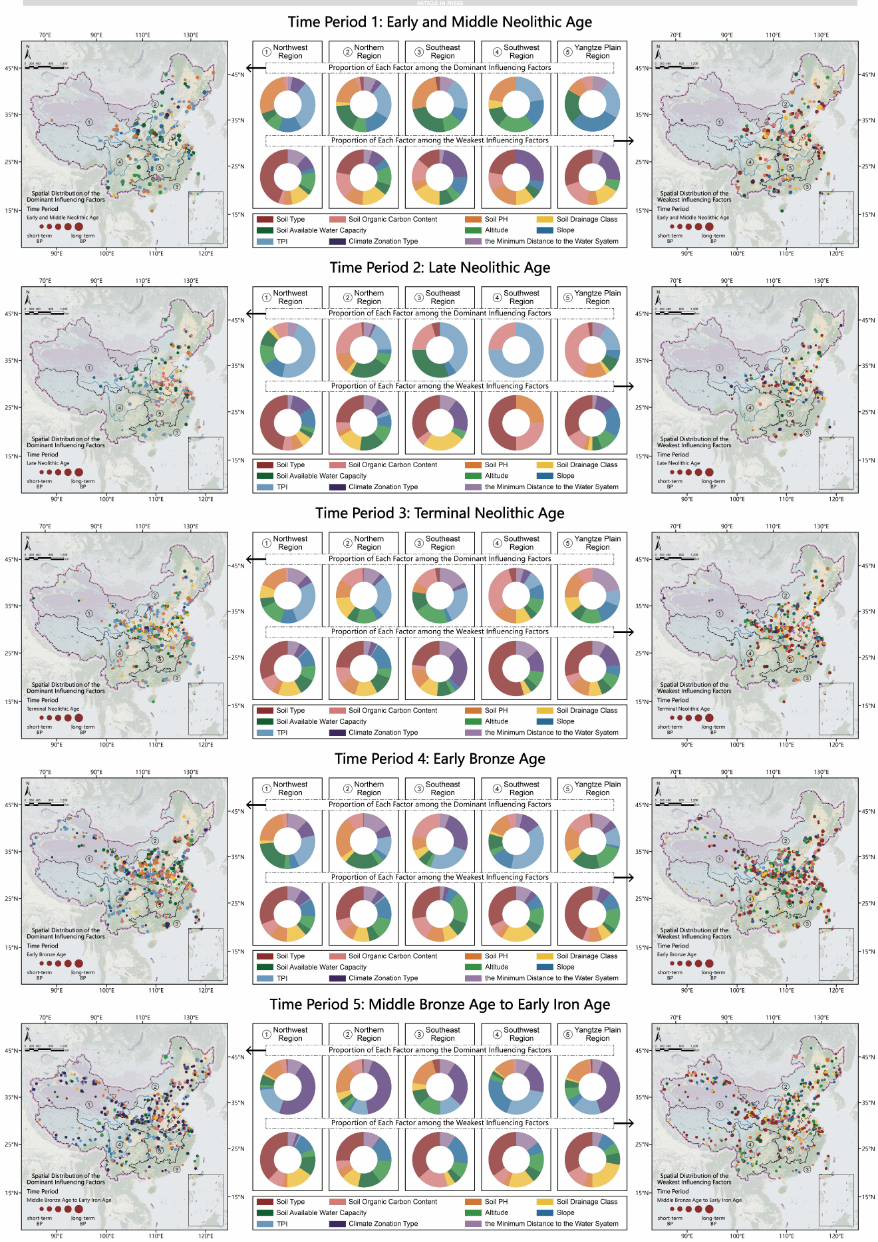
03 不同历史时期环境因素对聚落形成影响变化
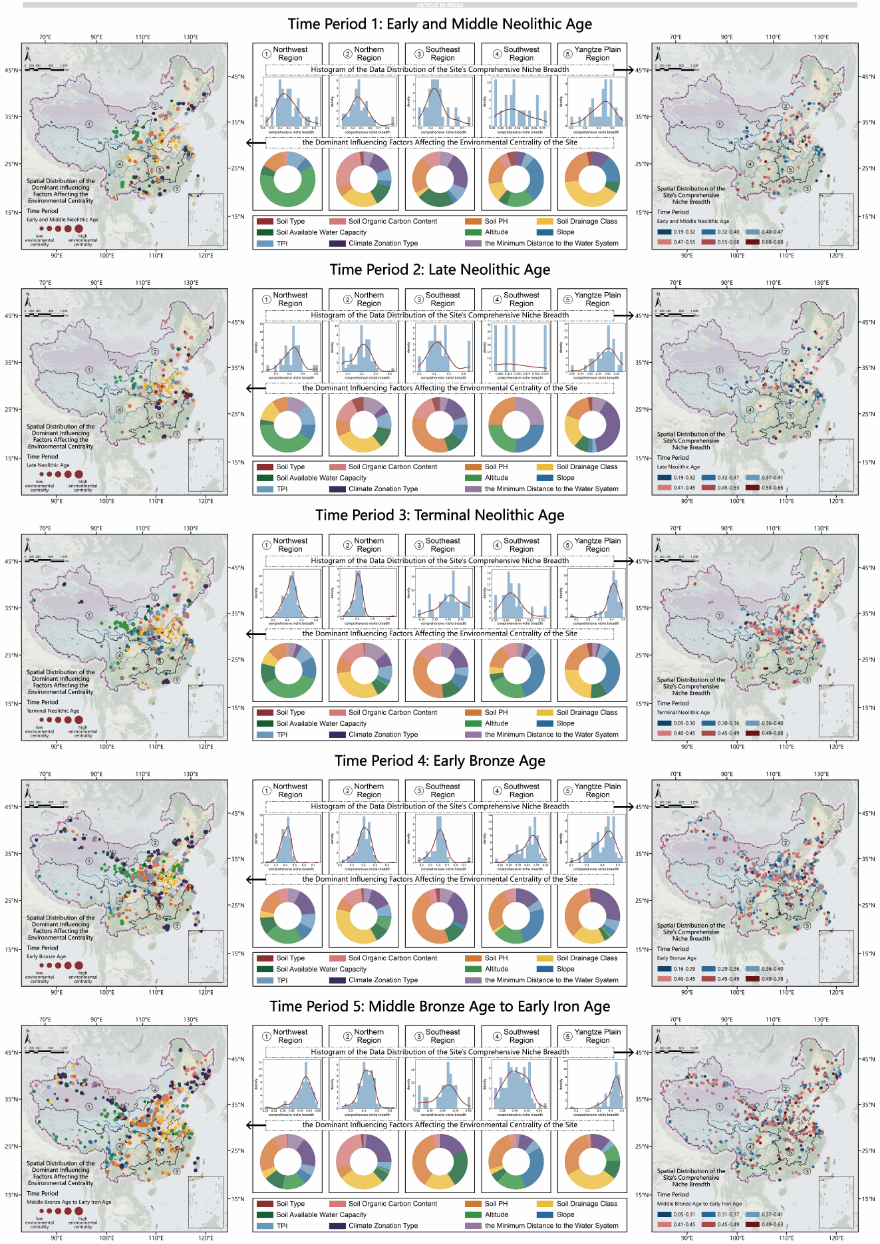
04 史前聚落生态位中心性与生态位宽度演化
原文链接:https://www.nature.com/articles/s40494-026-02814-y
原文转引:https://mp.weixin.qq.com/s/4sv2-vrV5h2vhy0_WQzPKg

