文章信息:Rajput, A. A., Liu, C., Liu, Z. , & Mostafavi, A. (2024). Human-centric characterization of life activity flood exposure shifts focus from places to people. Nature Cities, 1(4), 264–274. https://doi.org/10.1038/s44284-024-00043-7
整理人:徐嘉苗,2025级硕士研究生
整理时间:2026年7月25日
Abstract: A human-centric approach to assessing flood exposure moves beyond traditional spatial assessment by quantifying flood exposure based on life activity. This novel method characterizes flood exposure by measuring dwell time in flood-prone areas, using fine-resolution, anonymized smartphone data. Comparative analysis across 18 US cities reveals important disparities in life activity flood exposure (LAFE) and highlights the influence of urban forms and structures on LAFE. Furthermore, the research uncovers bimodal distributions in LAFE, indicating disparities even among cities with similar spatial flood risks. By focusing on the effect of daily human activities in flood-prone areas, this approach offers a more comprehensive understanding of flood impacts on daily activities and socioeconomic factors. The findings provide urban scientists and flood risk managers with a practical tool, underscoring the importance of human activity patterns in flood risk assessment, and offer valuable insights for enhanced analysis of flood exposure and risk.
摘要:以人为中心的洪水暴露评估方法超越了传统的空间评估范式,通过基于生命活动来量化洪水暴露。这种新颖的方法利用高分辨率、匿名化的智能手机数据,通过测量人们在洪水易发区域的停留时间(dwell time)来表征洪水暴露。对18个美国城市的比较分析揭示了生命活动洪水暴露(Life Activity Flood Exposure, LAFE)中的重要差异,并凸显了城市形态与结构对LAFE的影响。此外,研究发现了LAFE的双峰分布特征,表明即使在空间洪水风险相似的城市之间,也存在显著的暴露差异。通过关注日常人类活动在洪水易发区域的影响,该方法为理解洪水对日常活动和社会经济因素的影响提供了更全面的视角。研究结果为城市科学家和洪水风险管理者提供了一个实用工具,强调了人类活动模式在洪水风险评估中的重要性,并为洪水暴露与风险分析提供了有价值的洞见。
1. 研究背景
2. 研究意义
3. 研究方法
4. 主要结论
5. 研究展望
6. 研究主要图表
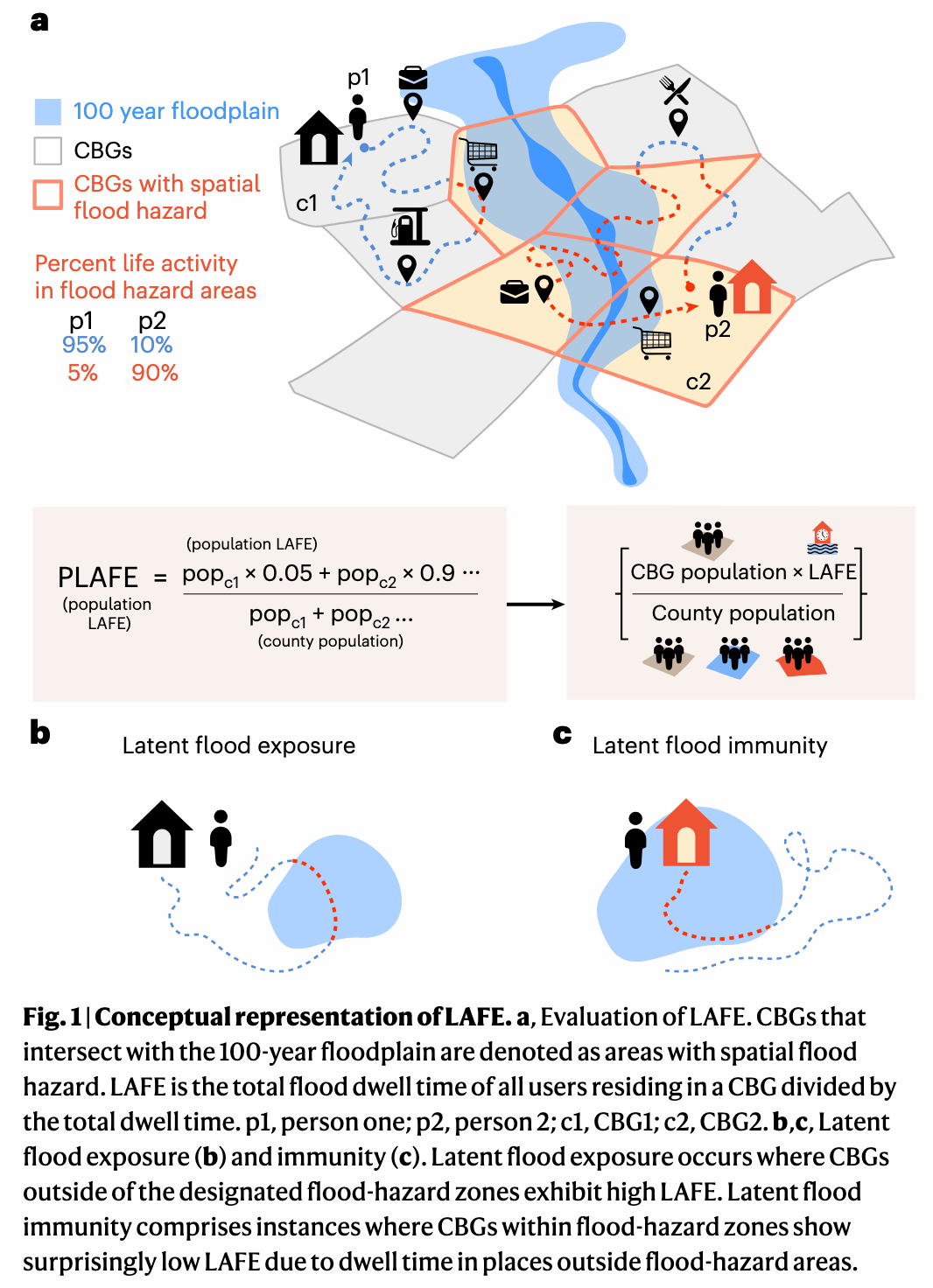
01 LAFE概念示意图
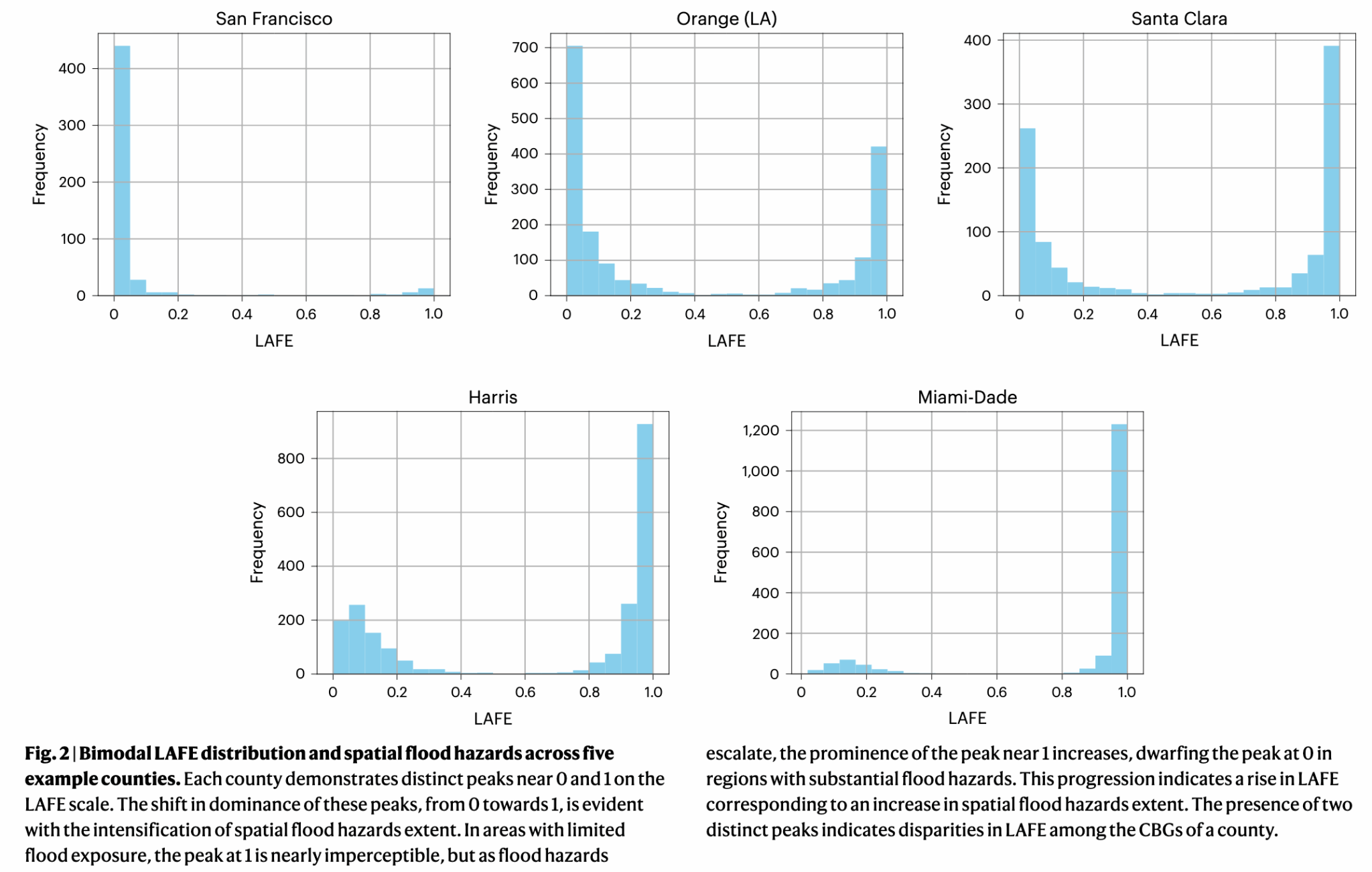
02 五个示例县的双峰LAFE分布与空间洪水危险程度对比
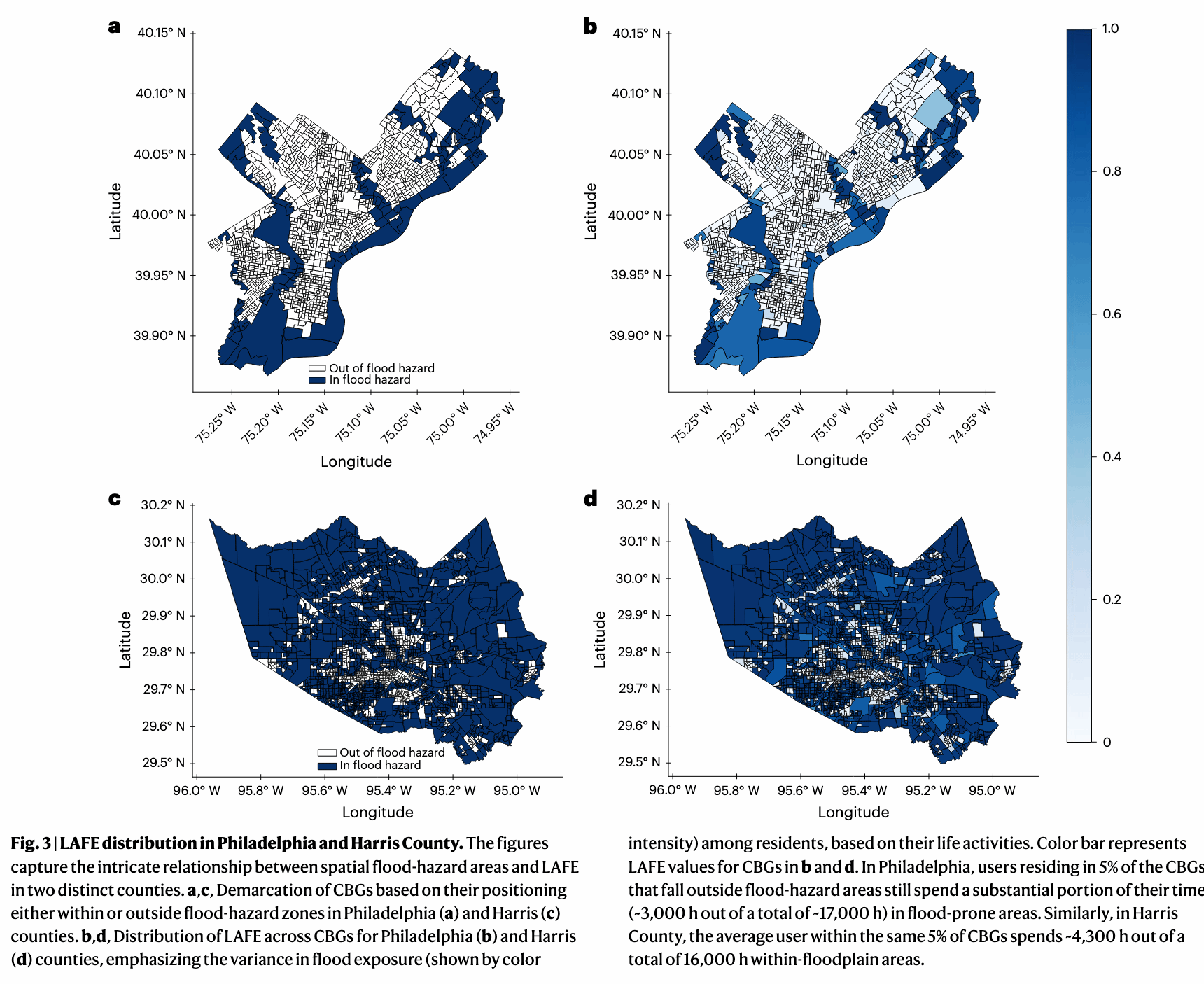
03 费城和哈里斯县的LAFE分布图
04 潜在洪水暴露与免疫评估图
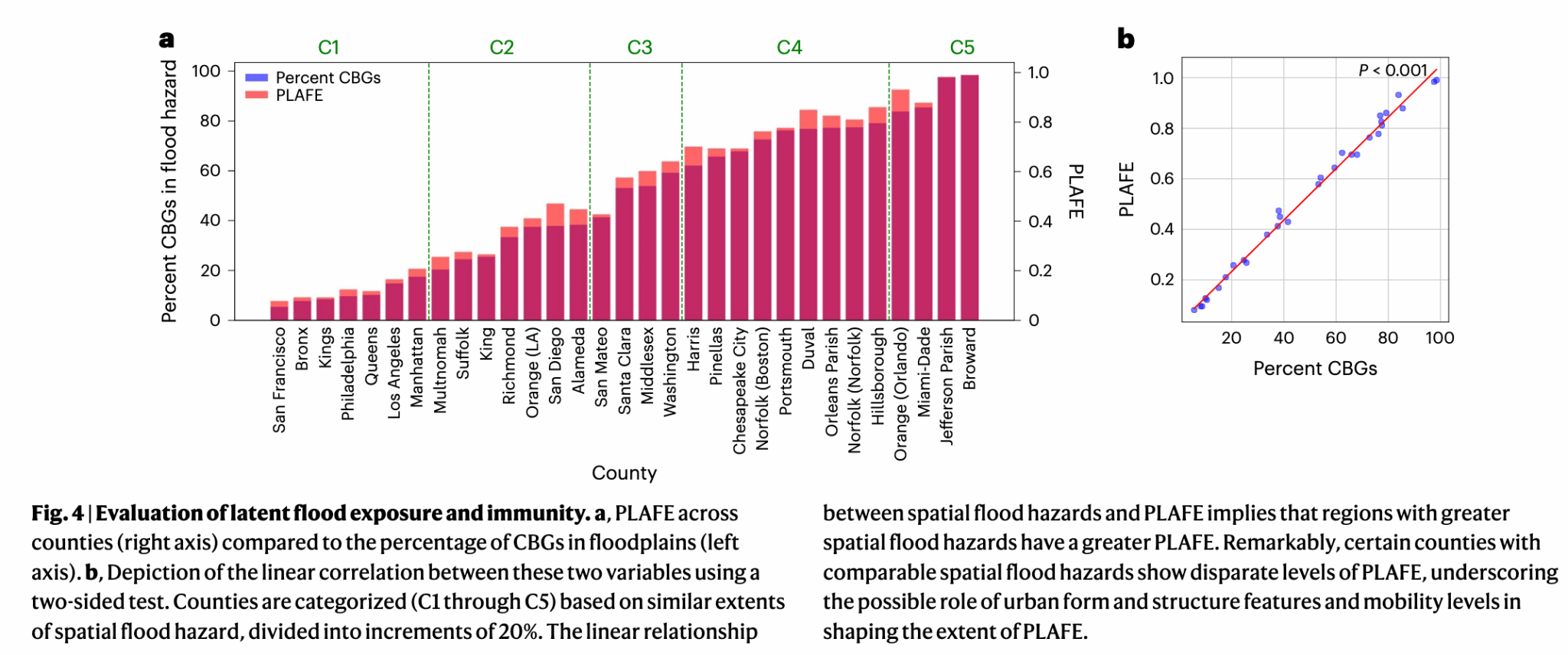
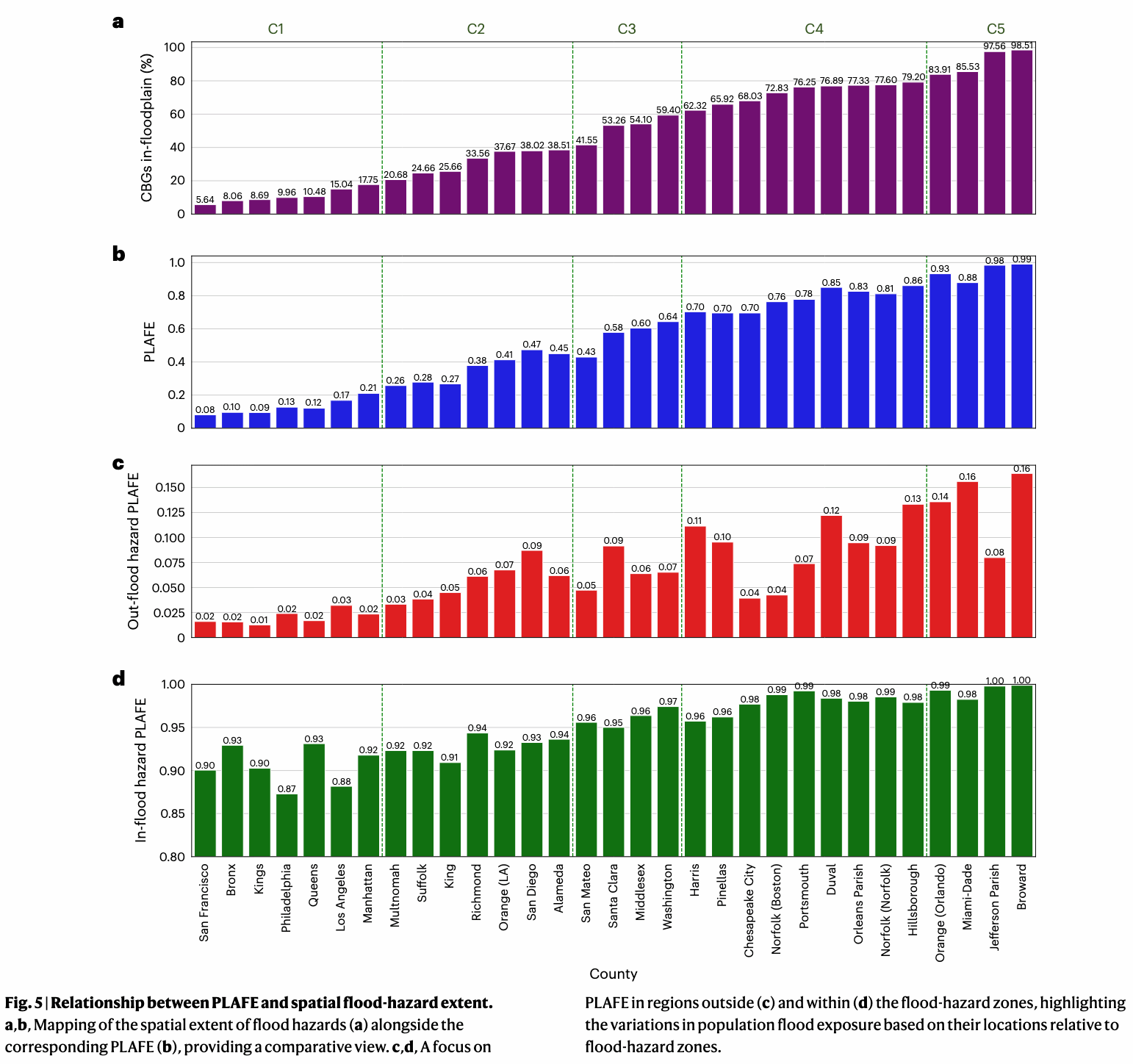
05 PLAFE与空间洪水危险程度的空间分布对比图
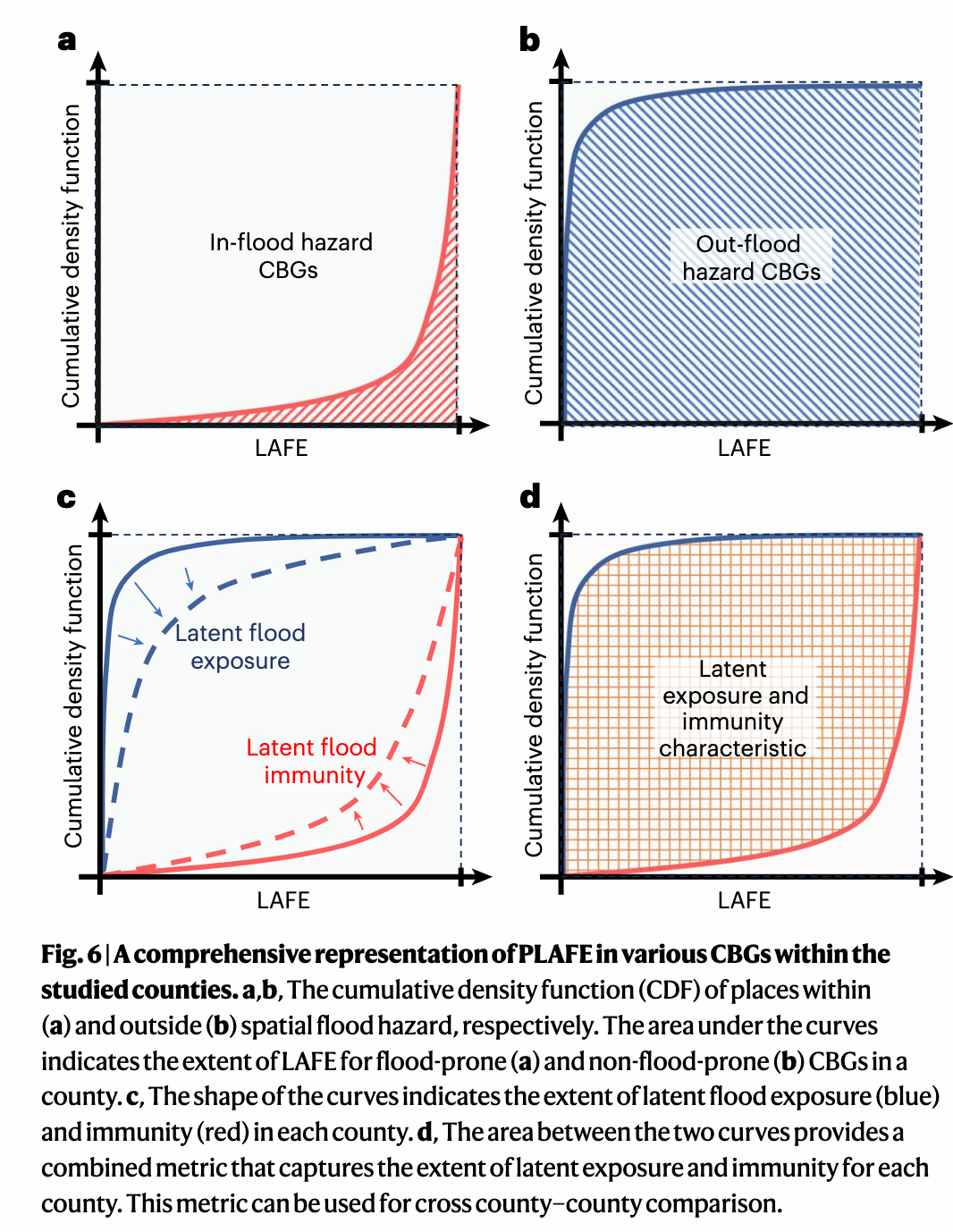
06 研究国家内各CBG中PLAFE
原文链接:https://www.nature.com/articles/s41467-024-50347-4
原文转引:https://mp.weixin.qq.com/s/QFfv5C2vApSifMkrfA6khg

